

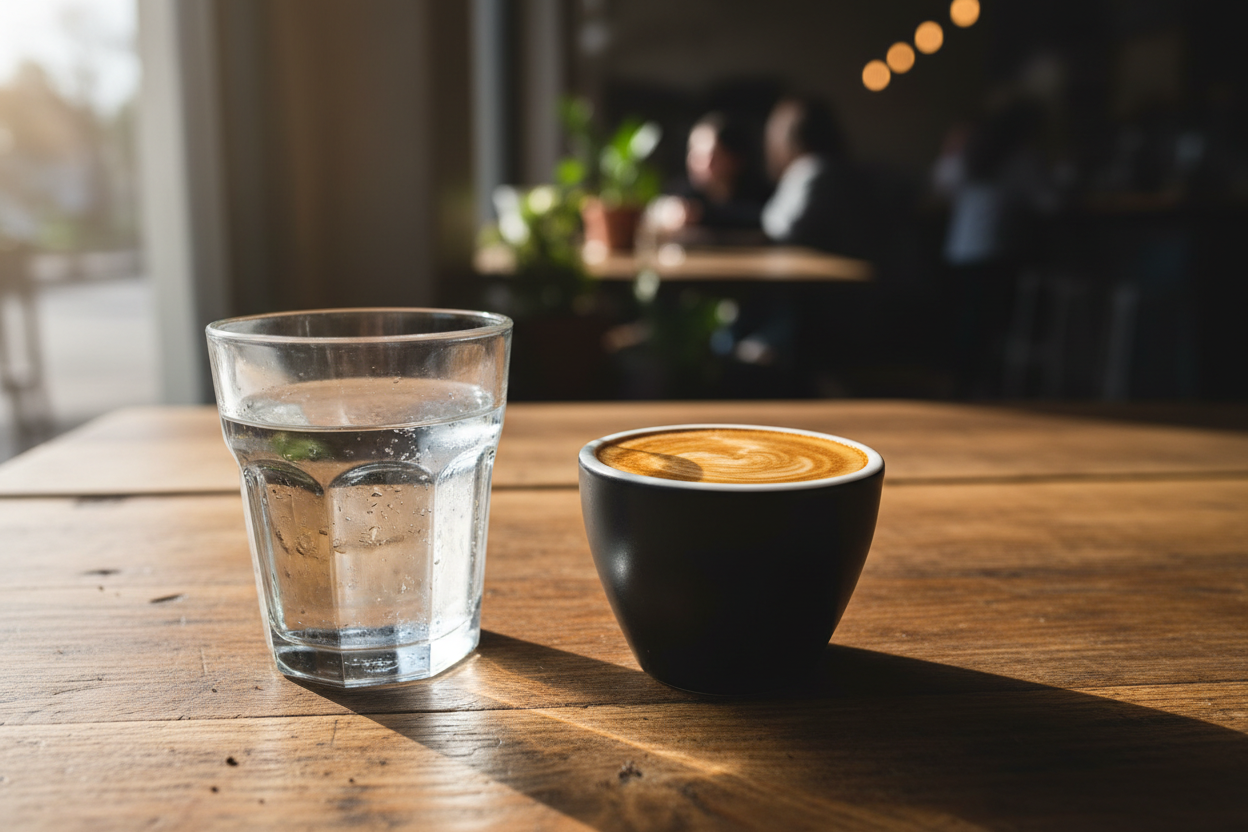
Coffee is 98% water. The quality of that water shapes the quality of your cup more than most people realize.
Water isn't just a delivery mechanism-it's an active participant in extraction. The minerals in water (primarily calcium and magnesium) help pull flavor compounds out of the coffee grounds. Too few minerals, and extraction is weak, producing flat, underwhelming coffee. Too many, and you get harsh, over-extracted flavors and scale buildup in your equipment.
The problem with tap water: It varies wildly. Some tap water is excellent for coffee. Some is heavily chlorinated, which adds off-flavors. Some is so hard it leaves mineral deposits everywhere. You won't know without testing or tasting.
The problem with distilled water: It's too pure. Without minerals, water can't extract properly. Your coffee will taste hollow.
What works:
Filtered water is usually the best balance-it removes chlorine and reduces excessive minerals while keeping enough for good extraction. A simple carbon filter (like a Brita) handles most issues. If you're in a hard water area, you might need something more robust.
The simplest test: if your tap water tastes good to drink, it will probably make good coffee. If it tastes like chlorine or metal, filter it.
Water isn't the most exciting part of the ritual. But getting it right removes a variable-one less thing between you and a good cup.
Share:
What does 'crema' mean and why does it matter?